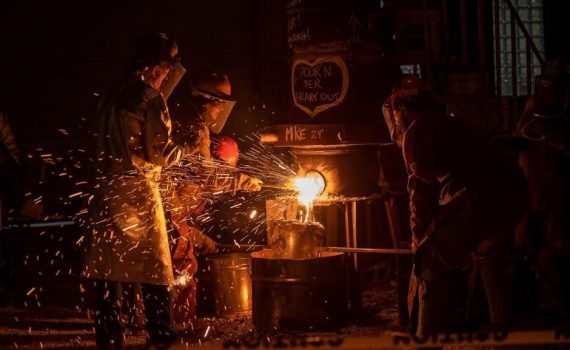
crucible pdf
Category : PDF
Crucible PDF: A Comprehensive Overview (as of 04/30/2026)
Crucible Industries’ PDFs, like Issue 2 for CPM S110V, detail typical material properties, heat treatment responses, and chemical compositions for tool steels.
What is a Crucible PDF?
Crucible PDFs are official data sheets released by Crucible Industries, providing comprehensive metallurgical information about their specialized tool steels, such as CPM S110V. These documents, like “data-sheet-crucible-industries.pdf”, outline typical values for chemical composition – including carbon, chromium, vanadium, and manganese content – alongside crucial heat treatment guidelines.
They serve as essential resources for engineers and metallurgists, detailing austenitizing temperatures, hardness (HRC) expectations, and tempering considerations. Crucially, they note that values are typical and variations can occur.
Crucible Industries’ data sheets, readily available as PDFs, are foundational documents for understanding their powder metallurgy tool steels. These sheets, exemplified by Issue 2 for CPM S110V, aren’t rigid specifications, but rather guides presenting typical properties.
They emphasize that variations in chemistry, size, and heat treatment are normal. For precise data or assistance, the sheets consistently recommend consulting a local Crucible Service Center for metallurgical engineering support.
Understanding the CPM S110V Data Sheet
The CPM S110V data sheet (Issue 2) provides crucial insights into this high-vanadium stainless steel. It details typical values for chemical composition – Carbon at 1.05%, Chromium at 0.50%, Vanadium at 0.75%, and Manganese at 0;75%.
Importantly, the document stresses these are typical values, acknowledging potential deviations due to manufacturing variables. The sheet also outlines the steel’s response to various heat treatments and resulting hardness levels.
Key Properties Listed in the PDF
The CPM S110V PDF prominently lists hardness values achievable at different austenitizing temperatures, ranging from 1850°F to 2150°F. It details the steel’s chemical composition, including precise percentages of carbon, chromium, vanadium, and manganese.
Furthermore, the document specifies typical values, acknowledging potential variations. Crucially, it emphasizes the availability of metallurgical engineering assistance for specific applications and data interpretation.
Typical Values vs. Actual Values
Crucible Industries’ data sheets, such as the CPM S110V PDF, explicitly state that presented properties are “typical values.” This acknowledges inherent variations stemming from chemistry, size, and heat treatment conditions.
Actual values obtained in practice may deviate. Therefore, the PDF strongly recommends consulting a local Crucible Service Center for additional data or specialized metallurgical engineering assistance to ensure optimal results and accurate application.
Chemical Composition Details
Crucible PDF data sheets meticulously outline the precise chemical composition of their steel alloys. For CPM S110V, key elements are quantified as follows: Carbon at 1.05%, Chromium at 0.50%, Vanadium at 0.75%, and Manganese also at 0.75%.
These percentages are crucial for predicting material behavior and performance. Variations, though normal, can impact properties, reinforcing the need for careful consideration during application.
Carbon Content (1.05%)
The 1.05% carbon content in CPM S110V, as detailed in Crucible PDFs, is fundamental to its exceptional hardness and wear resistance. This high carbon level significantly influences the steel’s ability to form martensite during heat treatment.
It’s a critical factor in achieving the desired HRC hardness values, making it ideal for demanding tooling applications. Precise carbon control is paramount for consistent performance.
Chromium Content (0.50%)
The 0.50% chromium content, specified in Crucible Industries’ data sheets like Issue 2, contributes significantly to CPM S110V’s corrosion resistance and hardenability. Chromium forms carbides, enhancing wear resistance and providing stability during high-temperature applications.
This element is crucial for maintaining the steel’s integrity and performance in challenging environments, extending tool life and reliability.

Vanadium Content (0.75%)
Crucible’s CPM S110V data sheets (like Issue 2) indicate a 0.75% vanadium content, a key component for exceptional wear resistance. Vanadium forms extremely hard vanadium carbides, significantly improving the steel’s ability to withstand abrasive wear and maintain a sharp cutting edge.
This contributes to extended tool life and superior performance in demanding applications.
Manganese Content (0.75%)
According to Crucible Industries’ data sheets, specifically Issue 2 for CPM S110V, the manganese content is specified at 0.75%. Manganese acts as a deoxidizer during steelmaking, improving its overall cleanliness and machinability. It also contributes to increased hardenability and strength, though to a lesser extent than vanadium or carbon.

This balance enhances the steel’s toughness.
Heat Treatment Response
Crucible PDF data sheets, such as the CPM S110V document, extensively cover heat treatment responses. Austenitizing temperature ranges are specified between 1850°F and 2150°F, directly impacting hardness. The data illustrates how varying temperatures affect the resulting HRC (Hardness Rockwell C) value.
Proper tempering is crucial to balance hardness with toughness, preventing brittleness and ensuring optimal performance.
Austenitizing Temperature Ranges (1850F ⎻ 2150F)
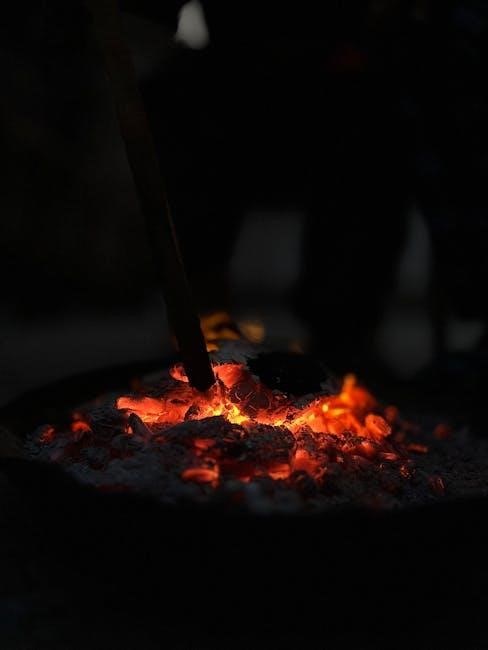
Crucible Industries’ CPM S110V PDF specifies an austenitizing temperature range of 1850°F to 2150°F. This critical step transforms the steel’s microstructure, preparing it for quenching and achieving desired hardness. Selecting the appropriate temperature within this range is vital, influencing grain size and subsequent mechanical properties.
Precise control during austenitizing is paramount for consistent results.
Hardness (HRC) Based on Temperature
The CPM S110V Crucible PDF demonstrates a direct correlation between austenitizing temperature and resulting hardness, measured on the Rockwell C (HRC) scale. While specific HRC values aren’t explicitly listed, the range of 1850°F-2150°F suggests achievable hardness levels dependent on precise temperature control during heat treatment.
Optimal hardness is crucial for tooling applications.
Tempering Considerations
Crucible’s CPM S110V data sheet doesn’t detail specific tempering procedures, but emphasizes the importance of controlled heat treatment. Tempering after austenitizing and hardening is vital to reduce brittleness and optimize toughness. The PDF advises consulting a Crucible Service Center for additional data or metallurgical engineering assistance to determine appropriate tempering parameters.
Proper tempering maximizes steel performance.
Crucible Steel: Historical Context
Historically, “crucible steel” became synonymous with high-quality steel, mirroring the characteristics once attributed to Damascus steel. Early production involved melting steel in small crucibles, a process yielding exceptional quality. This method contrasts with earlier cementation techniques.
The name reflects the forging process, and its origins are linked to ancient steelmaking traditions.
The Origins of Crucible Steel
Crucible steel’s story begins with the quest to replicate the legendary qualities of Damascus steel. While the exact methods of Damascus steel production remain debated, crucible steel emerged as a modern equivalent, achieving comparable performance through controlled melting.
Early crucible steel production centered around locations like Nishapur and Achsiket, utilizing small crucibles for melting and refining the steel.
Connection to Damascus Steel
Damascus steel, famed for its exceptional strength and distinctive patterns, captivated artisans for centuries. Modern understanding identifies crucible steel as the closest modern analogue to this historical material. The crucible process allowed for the creation of high-carbon steels with remarkable properties.
Crucible steel aimed to replicate the “magical” qualities attributed to Damascus blades, offering a comparable level of performance and durability.
Historical Production Methods – The Crucible Process
The crucible process, central to historical steelmaking, involved melting wrought iron with carbon-rich materials within sealed crucibles. This method, employed in locations like Nishapur and Achsiket, enabled precise control over steel composition.
The resulting high-carbon steel, superior to earlier methods, was then forged into tools, weapons, and other valuable artifacts. This process is directly linked to the creation of crucible steel.

Tool Steel Classifications within Crucible PDFs
Crucible PDFs categorize tool steels based on their intended applications and properties. Water Hardening (W) steels excel in wear resistance, while Shock Resisting (S) steels offer toughness.
Cold Work tool steels are designed for forming and cutting without heat. These classifications, detailed in data sheets like Issue 2, guide material selection for specific tooling needs, ensuring optimal performance and longevity.
Water Hardening Tool Steels (W)
Crucible’s Water Hardening (W) tool steels, as classified within their PDFs, are renowned for exceptional wear resistance. These steels achieve high hardness through heat treatment, typically involving quenching in water.
They are ideal for applications demanding dimensional stability and resistance to abrasion, such as punches, dies, and blanking tools. Data sheets provide specific compositions and heat treatment guidelines for optimal W-steel performance.
Shock Resisting Tool Steels (S)
Crucible’s Shock Resisting (S) tool steels, detailed in their data sheets, are engineered for high impact toughness. These steels maintain hardness and resist fracture under repeated shock loading, making them suitable for demanding applications.
Common uses include chisels, punches, and forging dies. PDFs outline precise chemical compositions and recommended heat treatments to maximize S-steel’s ability to withstand forceful impacts without failure.
Cold Work Tool Steels
Crucible’s Cold Work Tool Steels, as described in their PDFs, are designed for applications where tools don’t generate significant heat during operation. These steels excel at maintaining hardness and wear resistance during cold forming, blanking, and trimming processes.
Data sheets specify compositions and heat treatments to optimize performance in applications like dies and punches, ensuring long tool life and dimensional accuracy in cold working operations.
Applications of Crucible Steel (Based on PDF Data)
Crucible Steel PDFs highlight diverse applications stemming from their superior properties. Tooling and die making benefit from the steel’s hardness and wear resistance, ensuring precision and longevity. Furthermore, high-performance cutting tools leverage these characteristics for efficient material removal.
The data sheets guide selection for specific needs, showcasing suitability for demanding environments where consistent performance is critical, as detailed in Issue 2 and beyond.
Tooling and Die Making
Crucible Steel, as outlined in available PDF data sheets, is exceptionally well-suited for tooling and die making due to its high hardness and resistance to abrasive wear. These properties ensure extended tool life and maintain dimensional accuracy during high-volume production runs.
The consistent quality detailed in documents like Issue 2 minimizes defects and maximizes efficiency in forming, stamping, and other manufacturing processes.
High-Performance Cutting Tools
Crucible PDF data, specifically concerning alloys like CPM S110V, demonstrates suitability for high-performance cutting tools. The steel’s exceptional hardness, coupled with its toughness, allows for superior edge retention and resistance to chipping during demanding machining operations.
These characteristics translate to increased cutting speeds, improved surface finishes, and reduced tool replacement costs, as detailed within the material specifications.
Analyzing Data Sheet Issue 2
Data Sheet Issue 2 for CPM S110V reveals a precise chemical composition: 1.05% Carbon, 0.50% Chromium, 0.75% Vanadium, and 0.75% Manganese. Analyzing these ratios is crucial for predicting performance.
The document emphasizes that values are typical, and variations exist. It strongly recommends consulting a Crucible Service Center for “metallurgical engineering assistance” when specific applications demand precise material characteristics beyond the standard data provided.
Carbon, Chromium, Vanadium, and Manganese Ratios
The CPM S110V PDF (Issue 2) showcases a notable carbon content of 1.05%, contributing to high hardness. Chromium at 0.50% enhances corrosion resistance, while 0.75% Vanadium boosts wear resistance and high-temperature strength.
Manganese, also at 0.75%, aids in hardenability and toughness. These carefully balanced ratios are fundamental to the steel’s exceptional performance in demanding tooling and cutting applications, as detailed within the data sheet.
Importance of Metallurgical Engineering Assistance
Crucible Industries’ PDFs explicitly state that properties listed are typical values. Variations in chemistry, size, and heat treatment can occur. Therefore, the data sheet recommends consulting a local Crucible Service Center for “additional data or metallurgical engineering assistance.”

Expert guidance ensures optimal performance, especially when tailoring the steel to specific applications. This support is crucial for maximizing the benefits of CPM S110V and achieving desired results.

Nishapur and Achsiket: Historical Production Locations
Historical crucible steel production flourished in locations like Nishapur and Achsiket. Archaeological evidence suggests these sites were central to crafting what became known as Damascus steel – now understood as a form of crucible steel.
Artifacts discovered indicate sophisticated metallurgical practices were employed, producing high-quality steel used for items like mirrors and calligraphic bands, demonstrating advanced craftsmanship.
Archaeological Evidence of Crucible Steel Production
Excavations at Nishapur and Achsiket reveal compelling evidence of ancient crucible steelmaking. Discoveries include fragments of crucibles themselves, alongside slag and remnants of steel production processes. Notably, beautifully crafted steel mirrors with intricate calligraphic bands – some gilded in gold and silver –
demonstrate the high skill level achieved. These artifacts confirm the region’s historical importance in producing exceptional steel quality.
Bright Steel and Crucible Steel Artifacts
Historical artifacts showcase the remarkable capabilities of crucible steel. Examples include exquisitely crafted steel mirrors, often adorned with delicate calligraphic bands executed in gold and silver inlay. These mirrors, discovered at sites like Nishapur, demonstrate the advanced metallurgical skills
of ancient artisans. Such pieces highlight the aesthetic and functional qualities achievable with this superior steel, proving its value beyond mere tooling.
Examples: Steel Mirrors and Calligraphic Bands
Steel mirrors, originating from historical production centers, exemplify crucible steel’s polishability and durability. The backs of these mirrors frequently feature intricate calligraphic bands, sometimes in gold and silver, identifying ownership or offering dedications.
A British Museum artifact, once belonging to an amir’s wife, showcases this artistry. These details reveal not only technical prowess but also the cultural significance of crucible steel.

Accessing and Interpreting Crucible PDFs
Official Crucible Industries data sheets, such as the CPM S110V PDF (DS 07/10, Issue 2), are crucial for understanding material specifications. These documents detail typical values, acknowledging potential variations due to chemistry, size, and heat treatment.
Understanding revision numbers (like Issue 2) is vital, as updates reflect refined data. For specific applications or complex metallurgical questions, consulting a Crucible Service Center is recommended.
Locating Official Data Sheets
Accessing authentic Crucible Industries PDFs is paramount for accurate material data. While a specific central repository isn’t explicitly stated, referencing “your local Crucible Service Center” is advised for obtaining the latest versions. The example provided references “data-sheet-crucible-industries.pdf”, suggesting direct access may be possible.
Always prioritize official sources to ensure you’re working with current specifications, like Issue 2 for CPM S110V, and avoid relying on potentially outdated information.
Understanding Data Sheet Revisions (e.g., Issue 2)
Data Sheet revisions, such as “Issue 2” for the CPM S110V PDF, signify updates to the documented properties and recommendations. These changes reflect ongoing research, refinements in manufacturing processes, or newly discovered metallurgical insights.
It’s crucial to utilize the latest issue to ensure accuracy, as earlier versions may contain superseded information. Always confirm you have the most current data before making critical engineering decisions.