rotator cuff strengthening exercises resistance bands pdf
Category : PDF
Understanding the Rotator Cuff
The rotator cuff is a crucial group of muscles and tendons, stabilizing the shoulder joint and enabling a wide range of motion, especially important for athletes and active individuals․
Injuries are common, particularly with repetitive arm movements, impacting those in professions requiring overhead work or frequent reaching, and can significantly limit daily activities․
Often misunderstood due to its complexity, the rotator cuff is frequently neglected in exercise routines, even by those who are regularly active, leading to potential instability and pain;
What is the Rotator Cuff?
The rotator cuff isn’t a single muscle, but a group of four muscles – supraspinatus, infraspinatus, teres minor, and subscapularis – that surround the shoulder joint․ These muscles and their corresponding tendons work together to control shoulder movement and provide stability․ They essentially keep the head of your humerus (upper arm bone) securely within the glenoid cavity (socket) of your scapula (shoulder blade)․
This intricate system allows for a remarkable range of motion, enabling us to lift, rotate, and move our arms in countless directions․ The rotator cuff’s primary function is not power, but rather dynamic stabilization․ It controls the shoulder during movement, preventing dislocation and ensuring smooth, coordinated actions․
Understanding its composition is key to appreciating its vulnerability․ Because the tendons pass through a relatively narrow space, they are susceptible to compression and irritation, especially with repetitive overhead activities․ This can lead to inflammation, tendinitis, or even tears, impacting the shoulder’s functionality and causing significant discomfort․ Proper strengthening and conditioning are vital for maintaining its health․
Rotator Cuff Injuries: Common Causes
Rotator cuff injuries rarely stem from a single, acute event; more often, they develop gradually over time due to repetitive strain and overuse․ Individuals involved in occupations or sports requiring frequent overhead arm movements – such as painting, construction, tennis, or baseball – are particularly susceptible․ This repetitive motion can lead to micro-tears in the tendons, causing inflammation and pain․
Age is also a significant factor, as tendons naturally lose elasticity and become more prone to injury with age․ This degenerative process, combined with repetitive use, increases the risk of tears; However, acute injuries, like a fall directly onto the shoulder, can also cause immediate damage․
Poor posture and improper lifting techniques contribute to imbalances in shoulder mechanics, placing undue stress on the rotator cuff․ Neglecting to warm up properly before activity or failing to strengthen the surrounding muscles can further exacerbate the risk․ Addressing these factors is crucial for prevention and rehabilitation․
Symptoms of a Rotator Cuff Injury
The presentation of a rotator cuff injury can vary significantly, ranging from mild discomfort to debilitating pain․ A common initial symptom is a dull, aching pain deep within the shoulder, often radiating down the arm․ This pain typically worsens with overhead activities, reaching behind the back, or lifting heavy objects․
Many individuals experience weakness in the shoulder, making it difficult to perform everyday tasks like combing hair or reaching for items on a high shelf․ Night pain is also a frequent complaint, often disrupting sleep․ A clicking or popping sensation in the shoulder joint may be present, though not always indicative of a tear․
In more severe cases, a sudden, sharp pain can occur, potentially signaling a complete tear of one or more rotator cuff tendons․ This may be accompanied by significant loss of strength and range of motion․ Seeking prompt medical evaluation is crucial for accurate diagnosis and appropriate treatment․

Resistance Bands for Rotator Cuff Strengthening
Resistance bands offer a simple, effective, and accessible method for strengthening the rotator cuff muscles, suitable for all fitness levels and aiding in injury recovery․
Benefits of Using Resistance Bands
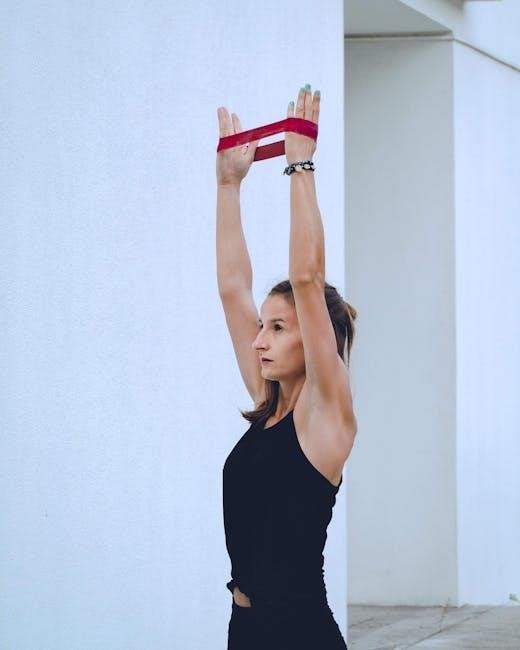
Resistance bands provide a versatile and cost-effective approach to rotator cuff rehabilitation and strengthening, offering numerous advantages over traditional weights․ Their portability allows for exercise anywhere, making consistency easier to achieve, and they’re excellent for corrective exercises․
Unlike fixed-weight dumbbells, bands provide variable resistance, meaning the tension increases as the band stretches, closely mimicking the natural strength curve of the rotator cuff muscles․ This progressive resistance is ideal for building strength throughout the full range of motion․
Bands are also gentler on the joints, reducing the risk of further injury during rehabilitation, and are beneficial for beginners or those with limited strength․ They’re incredibly adaptable, suitable for both building muscle and aiding in functional movements like pull-ups․
Furthermore, resistance bands promote proper form, as they require controlled movements to maintain tension, and can be easily integrated into a comprehensive shoulder strengthening routine, promoting healing and preventing future injuries․
Choosing the Right Resistance Band
Selecting the appropriate resistance band is crucial for effective rotator cuff strengthening, and depends heavily on your current strength level and exercise goals․ Bands come in varying resistance levels, typically color-coded – from light to extra heavy․
Beginners should start with lighter resistance, focusing on proper form and controlled movements before progressing․ A light or medium band is often ideal for initial exercises, allowing you to build a foundation of strength without strain․
As you gain strength, gradually increase the resistance by switching to heavier bands․ This progressive overload is essential for continued muscle development and rehabilitation․ Consider having a set with multiple resistance levels for versatility․
Band material also matters; latex bands are common but can cause allergies, so consider latex-free options․ Length is another factor – longer bands are suitable for anchoring to doors or stable objects, while shorter bands are ideal for direct hand holds․
Safety Precautions When Using Resistance Bands
Prioritizing safety is paramount when incorporating resistance bands into your rotator cuff strengthening routine․ Always inspect bands for any cracks, tears, or signs of wear before each use; damaged bands can snap and cause injury․
Secure the band properly when anchoring it to a stable object, ensuring it won’t slip or move during exercise․ Avoid anchoring to unstable surfaces or objects that could topple over․ Maintain a firm grip throughout each repetition․
Control the movement throughout the entire range of motion, avoiding quick or jerky motions․ Focus on slow, deliberate contractions and extensions to maximize muscle engagement and minimize the risk of strain․
Listen to your body and stop immediately if you experience any pain․ Discomfort is a signal to adjust the exercise, reduce the resistance, or consult with a healthcare professional․ Proper form is more important than heavy resistance․

Rotator Cuff Strengthening Exercises with Resistance Bands
Resistance band exercises offer an accessible and effective way to rehabilitate and strengthen the rotator cuff, improving shoulder stability and range of motion for all fitness levels․
External Rotation
To perform external rotation with a resistance band, secure one end of the band to a stable object at elbow height․ Stand with your elbow bent at 90 degrees, keeping it tucked close to your side․ Hold the other end of the band with your hand․
Slowly rotate your forearm outward, away from your body, maintaining the 90-degree angle at your elbow․ Focus on squeezing the muscles in the back of your shoulder as you rotate․ Control the movement throughout the entire range of motion․
This exercise specifically targets the infraspinatus and teres minor, key muscles in the rotator cuff responsible for external rotation and shoulder stability․ It’s an important exercise for preventing and rehabilitating common shoulder injuries․
Trainer Kathleen Trotter demonstrates proper form, emphasizing the importance of controlled movements and maintaining correct posture․ Aim for 10-15 repetitions per set, focusing on quality over quantity․ Gradually increase resistance as you gain strength․
Remember to avoid compensating with other muscles, such as shrugging your shoulders or rotating your body․ Keep your core engaged and maintain a stable base throughout the exercise․ This will maximize effectiveness and minimize risk of injury․
Internal Rotation
For internal rotation using a resistance band, anchor the band securely to a stable object, again at elbow height․ Position yourself with your elbow bent at 90 degrees, firmly pressed against your side․ Grip the band with your hand, ensuring a comfortable hold․
Slowly rotate your forearm inward, towards your body, keeping your elbow tucked in․ Concentrate on activating the subscapularis muscle, the primary internal rotator of the shoulder․ Maintain control throughout the entire movement, avoiding jerky motions․
This exercise complements external rotation, balancing the forces around the shoulder joint and promoting overall stability․ It’s particularly beneficial for individuals with imbalances or those recovering from specific injuries․
Focus on a smooth, controlled arc of motion, and avoid letting the band snap back․ Aim for 10-15 repetitions per set, gradually increasing the band’s resistance as your strength improves․ Proper form is crucial to prevent strain․
Ensure your shoulder blade remains stable and doesn’t move during the rotation․ Engage your core to maintain a neutral spine and prevent unwanted compensation․ This exercise is effective for building strength and improving range of motion․
Scaption
Scaption, a unique shoulder exercise, targets the supraspinatus muscle, a key component of the rotator cuff․ To perform it with a resistance band, stand with your feet shoulder-width apart, stepping on the band to secure it․ Hold the band’s ends with your palms facing each other․
Raise your arms at a 30-45 degree angle forward and outward – this is the “scapular plane․” Avoid lifting directly to the front or side․ This angle minimizes impingement and maximizes supraspinatus activation․ Keep a slight bend in your elbows throughout the movement․
Focus on initiating the movement from your shoulder, not your arm․ Imagine drawing your shoulder blades down and back slightly as you lift․ This engages the stabilizing muscles around the scapula․
Slowly lower your arms back to the starting position, maintaining control․ Aim for 10-15 repetitions per set, adjusting the band’s resistance to challenge yourself appropriately․ Proper form is paramount to avoid injury․
Scaption is excellent for improving shoulder function and reducing pain, particularly in individuals with impingement or rotator cuff tendinopathy․ It’s a gentle yet effective exercise for building strength and stability․
Rows
Resistance band rows are fundamental for strengthening the posterior shoulder muscles, crucial for rotator cuff health and balanced shoulder function․ Secure the resistance band around a stable object at chest height, or sit with your legs extended and the band looped around your feet․
Grasp the band with your palms facing each other, maintaining a slight bend in your elbows․ Sit upright with a straight back, engaging your core muscles to stabilize your spine․ Pull the band towards your torso, squeezing your shoulder blades together․
Focus on initiating the movement from your back muscles, not just your arms․ Imagine pulling with your elbows, keeping them close to your body․ Avoid shrugging your shoulders or using momentum to complete the exercise․
Slowly return to the starting position, controlling the band’s resistance․ Perform 10-15 repetitions per set, adjusting the band’s tension to match your strength level․
Rows counteract the common forward-rounded posture, strengthening the muscles needed to pull your shoulders back and down․ This improves posture and reduces strain on the rotator cuff, promoting long-term shoulder health․
Shoulder Abduction
Resistance band shoulder abduction targets the deltoid muscles, specifically the medial (side) portion, contributing to shoulder stability and range of motion․ Secure the resistance band under your feet, holding the ends with your hands, palms facing your body․
Stand with your feet shoulder-width apart, maintaining a slight bend in your elbows․ Keeping your back straight and core engaged, slowly raise your arms out to the sides, away from your body, until they reach shoulder height․
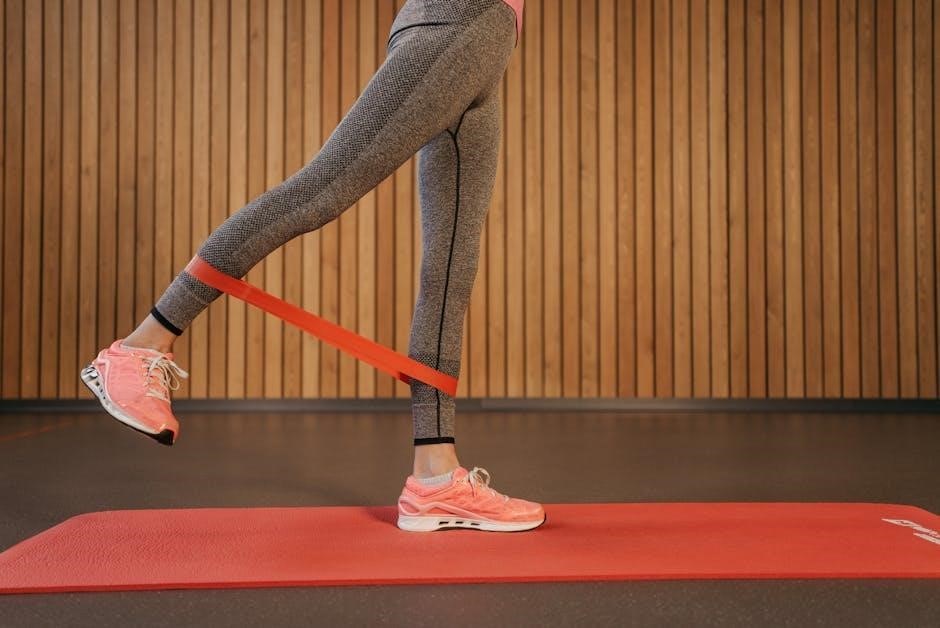
Avoid shrugging your shoulders or leaning your body to assist the movement; focus on isolating the deltoid muscles․ Maintain a controlled tempo throughout the exercise, resisting the band’s pull on the way up and down․
Slowly lower your arms back to the starting position, maintaining tension on the band․ Perform 10-15 repetitions per set, adjusting the band’s resistance to challenge your muscles appropriately․
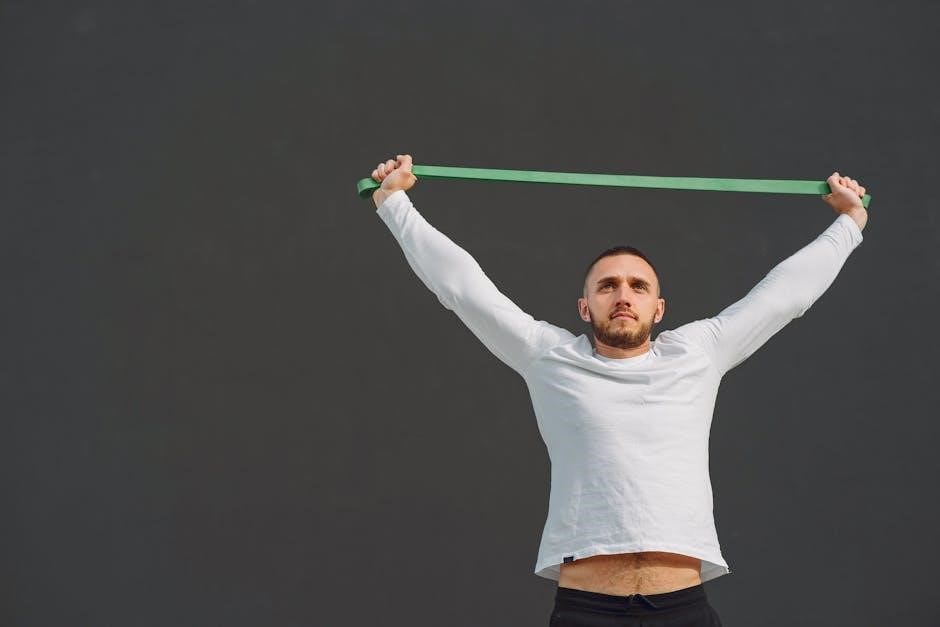
This exercise is beneficial for improving shoulder function and preventing imbalances that can contribute to rotator cuff issues․ Consistent abduction exercises enhance shoulder stability and overall upper body strength․
Overhead Press
The resistance band overhead press effectively strengthens the deltoids and upper trapezius, crucial for shoulder stability and functional movement․ Secure the band under your feet, grasping the ends with hands positioned at shoulder-width apart, palms facing forward․
Maintain a stable core and upright posture, with a slight bend in your elbows․ Slowly press the band upwards, extending your arms overhead until they are nearly straight, but avoid locking your elbows․
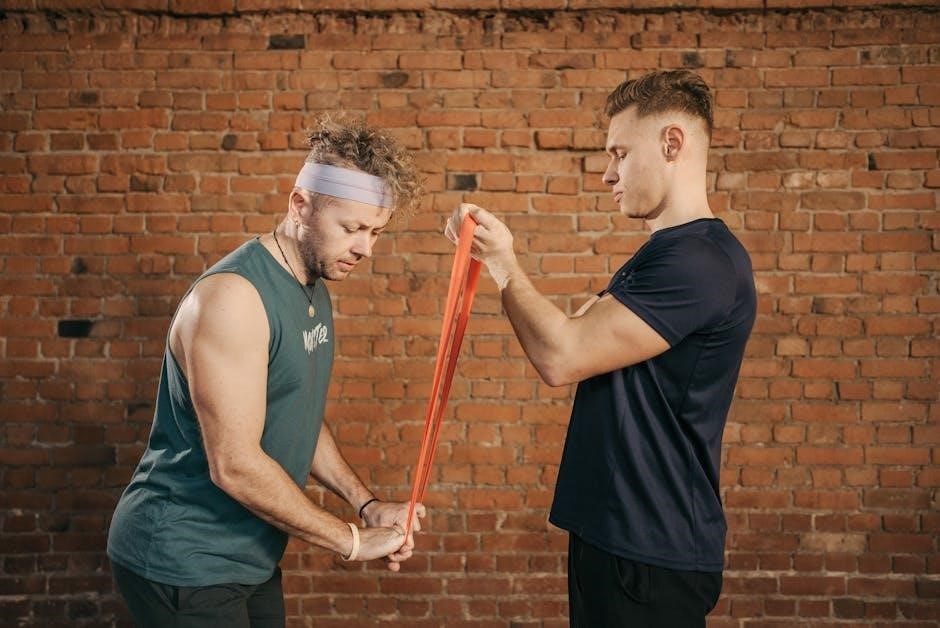
Focus on controlled movement, resisting the band’s pull throughout the entire range of motion․ Ensure your shoulders remain relaxed and do not shrug upwards during the press․
Slowly lower the band back to the starting position, maintaining tension and control․ Perform 10-15 repetitions per set, adjusting band resistance to match your strength level․
This exercise enhances shoulder strength and endurance, contributing to improved overhead mobility and reduced risk of injury․ Regular overhead presses are vital for maintaining a healthy and functional shoulder joint․
Bicep Curls with External Rotation
This combined exercise uniquely targets both the biceps and the external rotators of the rotator cuff, promoting comprehensive shoulder and arm strength․ Secure the resistance band under your feet, holding the ends with palms facing upwards, elbows close to your sides․
Initiate the movement by performing a standard bicep curl, bringing your hands towards your shoulders․ Simultaneously, as you curl, rotate your forearms outwards, emphasizing external rotation of the shoulder․
Maintain a controlled tempo throughout the exercise, focusing on the simultaneous activation of the biceps and external rotator muscles․ Avoid swinging your body or using momentum to complete the movement․
Slowly lower your arms back to the starting position, reversing both the curl and the external rotation․ Perform 10-15 repetitions per set, adjusting band resistance as needed․
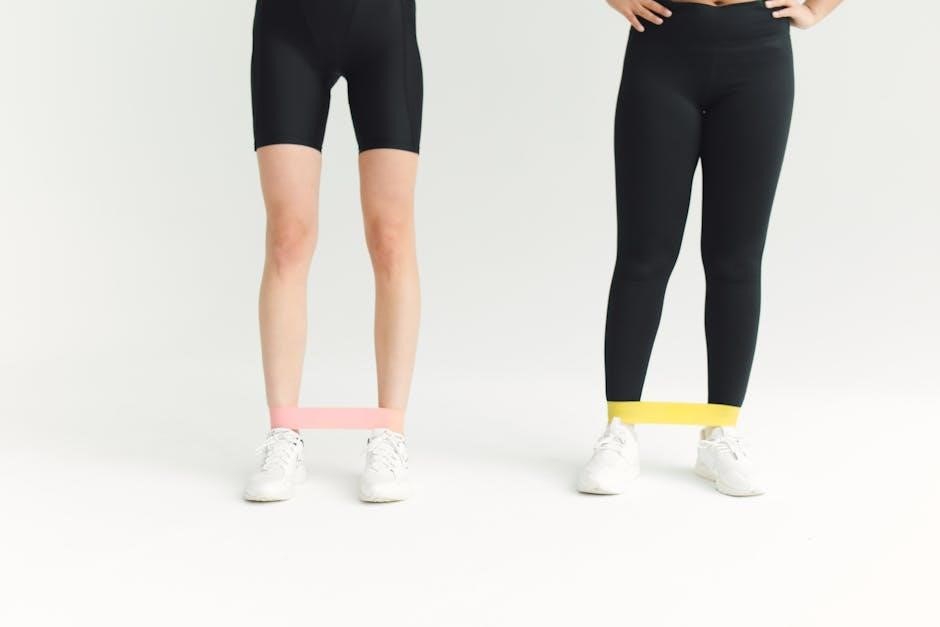
This exercise improves both strength and coordination, enhancing shoulder stability and functional movement patterns․ It’s a valuable addition to any rotator cuff rehabilitation or strengthening program․

Creating a Rotator Cuff Strengthening Routine
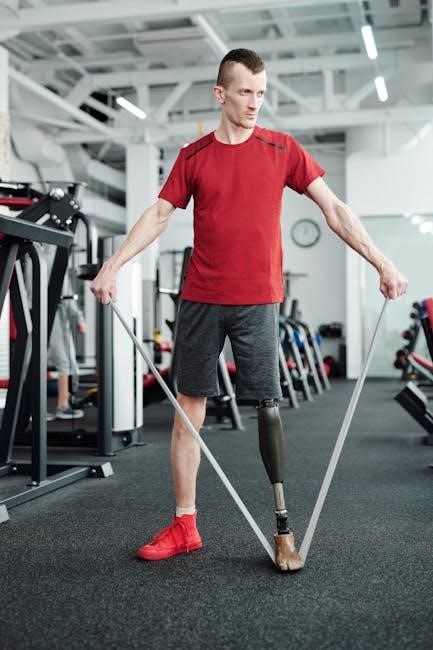
A well-structured routine is vital for optimal recovery and prevention, incorporating warm-up, targeted exercises, and cool-down phases for balanced muscle engagement and injury avoidance․
Warm-up Exercises
Preparing the shoulder muscles is paramount before initiating resistance band exercises․ A dynamic warm-up increases blood flow, improves range of motion, and reduces the risk of injury․ Begin with arm circles – both forward and backward – performing 10-15 repetitions in each direction․ These gently mobilize the shoulder joint․
Next, incorporate shoulder rotations using a light resistance band․ Anchor the band and perform internal and external rotations with controlled movements, again for 10-15 repetitions on each side․ This mimics the actions used in strengthening exercises, priming the rotator cuff muscles․
Cross-body shoulder stretches are also beneficial․ Gently pull one arm across your body, holding it for 15-20 seconds, and repeat on the other side․ This improves flexibility and prepares the muscles for the demands of the workout․ Finally, include scapular retractions – squeezing your shoulder blades together – to activate the muscles responsible for shoulder stability․ Perform 10-15 repetitions․ A thorough warm-up is non-negotiable for safe and effective rotator cuff strengthening․
Cool-down Exercises
Concluding your rotator cuff strengthening routine with a cool-down is essential for muscle recovery and flexibility․ Static stretches, held for 20-30 seconds, help to lengthen the muscles and reduce post-exercise soreness․ Begin with a cross-body shoulder stretch, gently pulling your arm across your chest until you feel a comfortable stretch in your shoulder․
Follow this with a sleeper stretch, bringing your injured arm across your body and using your other hand to gently push your elbow towards your chest․ This targets the posterior rotator cuff muscles․ Next, perform a triceps stretch by reaching one arm overhead and bending it at the elbow, using your other hand to gently pull your elbow further down․
Doorway pec stretch is also beneficial, placing your forearms on a doorway frame and gently leaning forward․ These stretches promote relaxation and improve range of motion, aiding in the recovery process․ Remember to breathe deeply throughout each stretch, maximizing its effectiveness and minimizing muscle tension․
Frequency and Repetitions
Consistency is key when strengthening your rotator cuff․ Aim to perform your resistance band exercises 2-3 times per week, allowing for at least one full day of rest between sessions to facilitate muscle recovery and prevent overtraining․ Begin with 2-3 sets of 10-15 repetitions for each exercise, focusing on controlled movements rather than speed․
Proper form is paramount; prioritize quality over quantity․ If you experience any pain, immediately stop the exercise and consult with a healthcare professional․ As your strength improves, you can gradually increase the resistance of the bands or the number of repetitions․
Listen to your body and adjust the frequency and repetitions accordingly․ Avoid pushing yourself too hard, especially in the initial stages of rehabilitation․ A progressive approach, gradually increasing the challenge, will yield the best results and minimize the risk of re-injury․ Remember, patience and consistency are vital for long-term success․
Progressing Your Routine
As your rotator cuff strengthens, it’s crucial to progressively challenge your muscles to continue seeing improvements․ This can be achieved in several ways․ First, increase the resistance of your bands by switching to a heavier band or doubling up on lighter bands․ Second, gradually increase the number of repetitions per set, aiming for 15-20 reps before increasing resistance․
Introduce more challenging variations of the exercises․ For example, slow down the eccentric (lowering) phase of the movement to increase time under tension․ You can also add sets, progressing from 2 to 3 or even 4 sets per exercise․
Consider incorporating more complex movements that challenge shoulder stability in multiple planes of motion․ Always prioritize proper form and listen to your body, avoiding any movements that cause pain․ A gradual and consistent progression will maximize your results and minimize the risk of setbacks․